If you want a home with character and a daily routine that feels connected to a real downtown, Plymouth gives you a lot to think about. Living near downtown Plymouth, WI can mean historic homes, local shops, riverfront parks, and community events all within a compact area. If you are weighing that lifestyle against a more car-oriented subdivision, this guide will help you understand what day-to-day life near downtown actually looks like. Let’s dive in.
What Downtown Plymouth Feels Like
Downtown Plymouth is not a generic commercial strip. It is an officially recognized historic district centered on the 100, 200, 300, and 400 blocks of East Mill Street, with architecture tied to late-19th and early-20th-century American movements and Classical Revival styles, according to the National Park Service.
That historic identity shapes the experience of living nearby. Instead of a separated shopping area and residential area, downtown Plymouth includes a mix of commercial, civic, and residential uses. A National Register continuation sheet for the Plymouth Post Office describes the area as a combined residential and commercial district, which helps explain why the neighborhood feels active and connected.
Homes Near Downtown Plymouth
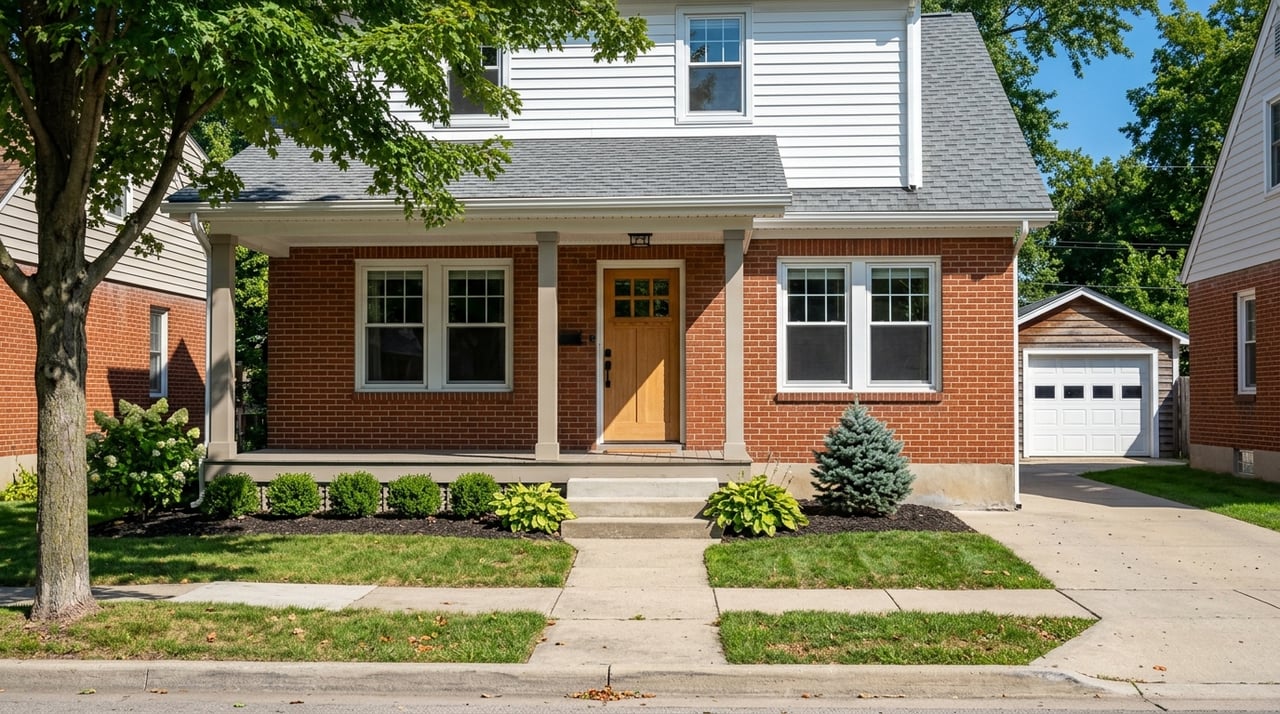
If you are looking near downtown, the housing story is largely about older homes with preserved details and established streetscapes. The Plymouth Chamber’s Historic Walking Tour highlights landmarked businesses and homes, with residential styles that include Queen Anne, Gothic Italianate, and Italianate architecture. The tour also points to notable historic residences such as the Gustave Zerler, Henry Huson, and Edward Kennedy homes on its tour information page.
For buyers, that usually means you may see more architectural variety than you would in a newer neighborhood. You may find homes with distinct exterior design, mature surroundings, and a setting that feels tied to Plymouth’s history. If you prefer newer layouts, larger attached garage setups, or a more uniform streetscape, that is where surrounding subdivisions may feel like a better fit.
Walkability And Daily Convenience
One of the biggest draws of living near downtown Plymouth is how much of your routine can happen close to Mill Street. Visit Sheboygan County describes Plymouth as having an intact historic downtown with antique and boutique shops, along with 30 murals that tell the city’s story. That creates a strong sense of place that many buyers notice right away.
Downtown shopping also leans local. The Chamber highlights The Shoppes on Mill Street as a 29-shop collection featuring items like furniture, vintage jewelry and clothing, toys, collectibles, coins, and glassware. In practical terms, nearby living supports the kind of day where you can browse local businesses instead of defaulting to big-box stops.
Dining follows that same pattern. The Chamber’s downtown dining information includes local options such as Moxie, Red Shorts Cafe, and Devour, along with casual restaurants and pubs. If you enjoy walking to coffee, meeting friends for a casual meal, or staying close to local businesses, downtown Plymouth supports that lifestyle well.
Parks And River Access Near Downtown
Downtown Plymouth also stands out for its public spaces. The 2025 Plymouth visitor guide lists several parks and green spaces close to the downtown core, including Bade-Utility Park, Veterans Park, Pocket Park, City Park, and Roosevelt-Nutt Park & Nutt Ski Hill.
That variety matters because it adds more than just scenery. Bade-Utility Park includes lighted tennis and pickleball courts, a footbridge across the Mullet River, and a recreation trail along the river. Veterans Park includes benches, landscaping, and views of the Mullet River dam, while the Veteran Memorial Trail runs along the river from Eastern Avenue toward the dam.
This helps downtown feel more walkable and more connected to the outdoors than many people expect from a small historic core. You are not just living near storefronts. You are also living near trails, river views, and park spaces that can become part of your everyday routine.
Trail Access Beyond The Core
If you like biking, jogging, or longer recreational routes, Plymouth offers strong regional trail access too. Sheboygan County reports that the Old Plank Road Trail runs roughly 21 miles to the county line, and the county notes more than 39 miles of paved off-road multi-use trails overall.
For active buyers, this adds another layer to downtown living. You can enjoy a compact, historic setting while still having convenient access to longer paved trail systems. That can be a meaningful advantage if outdoor activity is part of how you want to use the neighborhood.
Events And Community Energy
Living near downtown Plymouth also means living close to the city’s event calendar. Chamber and tourism sources highlight events like Mill Street Festival, Cheese Capital Festival, Cheese Capital Wine Walk, Pumpkin Walk, and holiday parade activities. Many of these events use Mill Street, Stayer Park, or the Riverwalk Path behind Stayer Park.
That creates a lively atmosphere, especially during event seasons. The Chamber notes that downtown is closed to vehicles during the Mill Street Festival, and other events also turn downtown spaces into pedestrian gathering areas. For many residents, that is part of the appeal.
Still, it is worth viewing this as a lifestyle choice. If you like being near festivals, local foot traffic, and community activity, downtown can be a strong fit. If you want a quieter setting with fewer seasonal crowds, a subdivision farther from the core may better match your routine.
Parking And Winter Considerations
Parking is one of the clearest tradeoffs of living near downtown. The city’s visitor guide includes a parking map showing street parking with a 2-hour limit, a parking ramp with timed parking rules, and winter restrictions that prohibit parking on any street or lot from December 1 through March 15 between 2 a.m. and 6 a.m.
That does not mean parking is impossible. It means you should go in with realistic expectations. Compared with a subdivision designed around driveways and garages, downtown living often requires a little more planning, especially during events or winter months.
If you are comparing areas, this can be one of the biggest quality-of-life questions to ask. The tradeoff is usually simple: downtown offers walkability, local character, and event access, while surrounding neighborhoods often offer easier parking, more yard-focused layouts, and a more car-centered routine.
Commuting From Plymouth
Plymouth’s location also works well for people who want a small-city feel without giving up road access. Wisconsin DOT says Plymouth sits on WIS 57, WIS 67, and WIS 23, with WIS 23 identified as a four-lane divided expressway and a major east-west connector.
The broader area is also well connected. The Sheboygan County EDC profile cited in the research indicates Interstate 43 is less than 10 miles away, and Sheboygan County Memorial Airport is about 7 miles away. For buyers, that means living near downtown Plymouth can still support regional commuting and travel needs without feeling disconnected.
Local Services And Small-Community Infrastructure
For many buyers, the appeal of Plymouth also comes from its local service structure. Plymouth Utilities provides electric, water, and wastewater service to the City of Plymouth and parts of surrounding townships, reflecting a locally managed setup rather than a large metro utility model.
That kind of infrastructure often matters more after move-in than before it. It is part of what gives smaller communities a different feel from edge-of-metro development patterns. When you live near downtown, that local framework is part of the overall ownership experience.
Is Downtown Plymouth Right For You?
If you are drawn to historic homes, established streetscapes, local businesses, riverfront parks, and a downtown that regularly hosts community events, living near downtown Plymouth may be a strong match. It offers a distinctive setting that feels rooted in place, not interchangeable with every other commercial corridor.
If your priorities lean more toward easier parking, a more private yard-first setup, and a daily routine built mostly around driving, you may prefer neighborhoods outside the downtown core. Neither option is better for everyone. The right fit depends on how you want your home and your neighborhood to support your day-to-day life.
If you are considering a move in Plymouth or anywhere in Southeast Wisconsin, working with someone who can help you compare property style, location tradeoffs, and long-term value can make the process much easier. When you are ready to talk through your options, connect with Craig Kasten for practical guidance and a clear next step.
FAQs
What types of homes are near downtown Plymouth, WI?
- Homes near downtown Plymouth are often older character homes in and around a historic district, with styles highlighted by the Chamber such as Queen Anne, Gothic Italianate, and Italianate.
How walkable is downtown Plymouth for daily life?
- Downtown Plymouth is very walkable for a small city, with shops, dining, murals, parks, and event spaces concentrated around Mill Street and nearby public spaces.
What is parking like near downtown Plymouth homes?
- Parking is generally manageable but more limited than in a subdivision, with timed street parking, parking ramp rules, and winter overnight parking restrictions.
What is the lifestyle like near downtown Plymouth, Wisconsin?
- The lifestyle is historic, local, and event-driven, with easy access to independent shops, cafes, murals, parks, riverfront spaces, and seasonal festivals.
How do you commute from downtown Plymouth to other areas?
- Most commuting is by car, with access to WIS 23, WIS 57, and WIS 67, plus relatively quick access to Interstate 43 and regional airport connections.