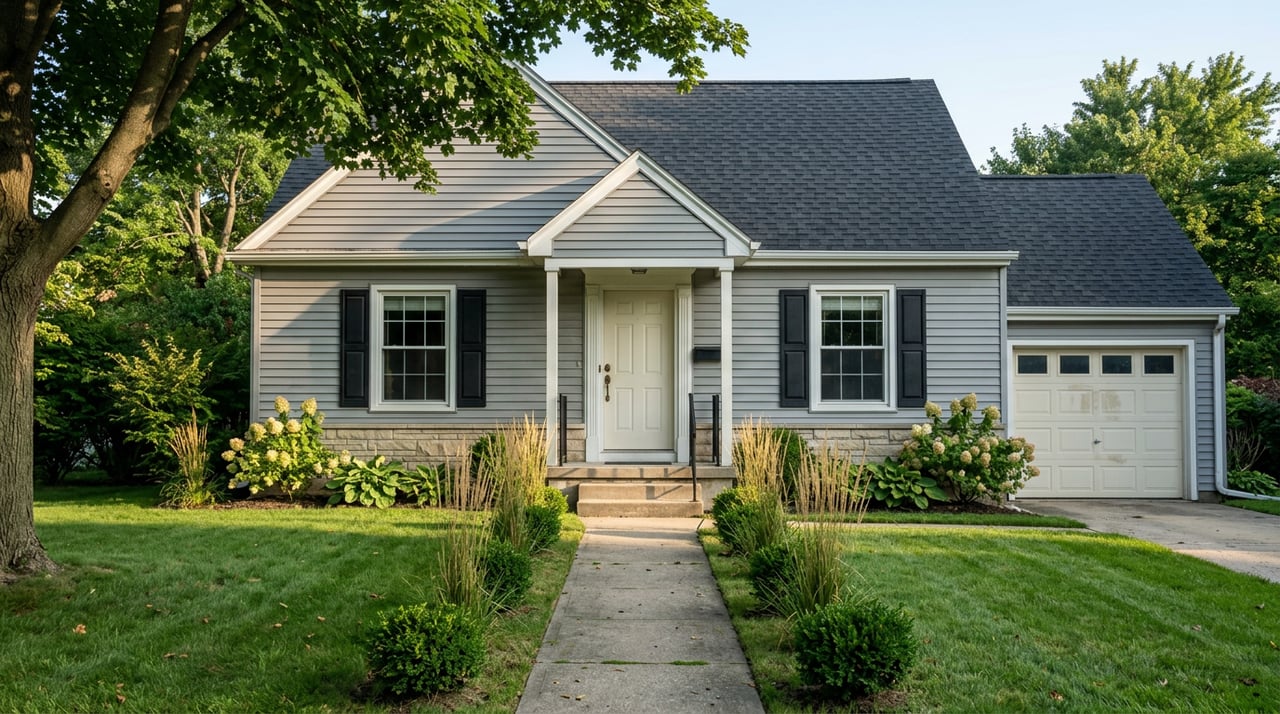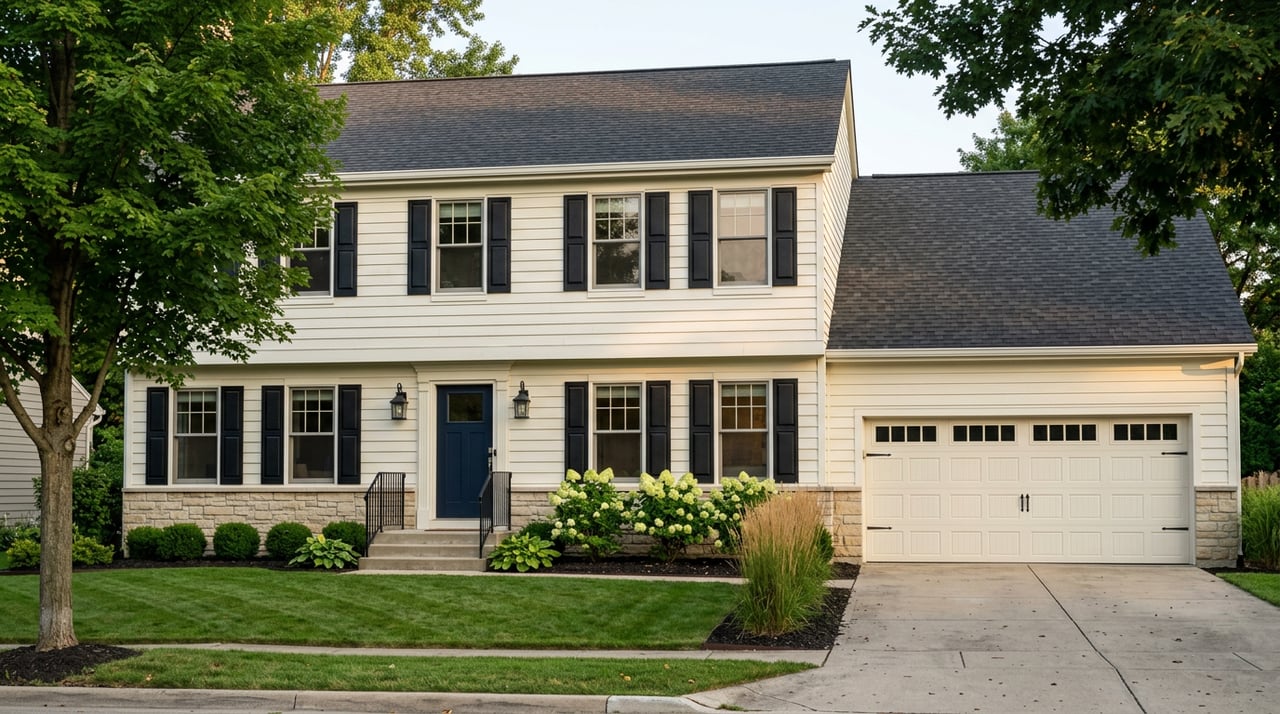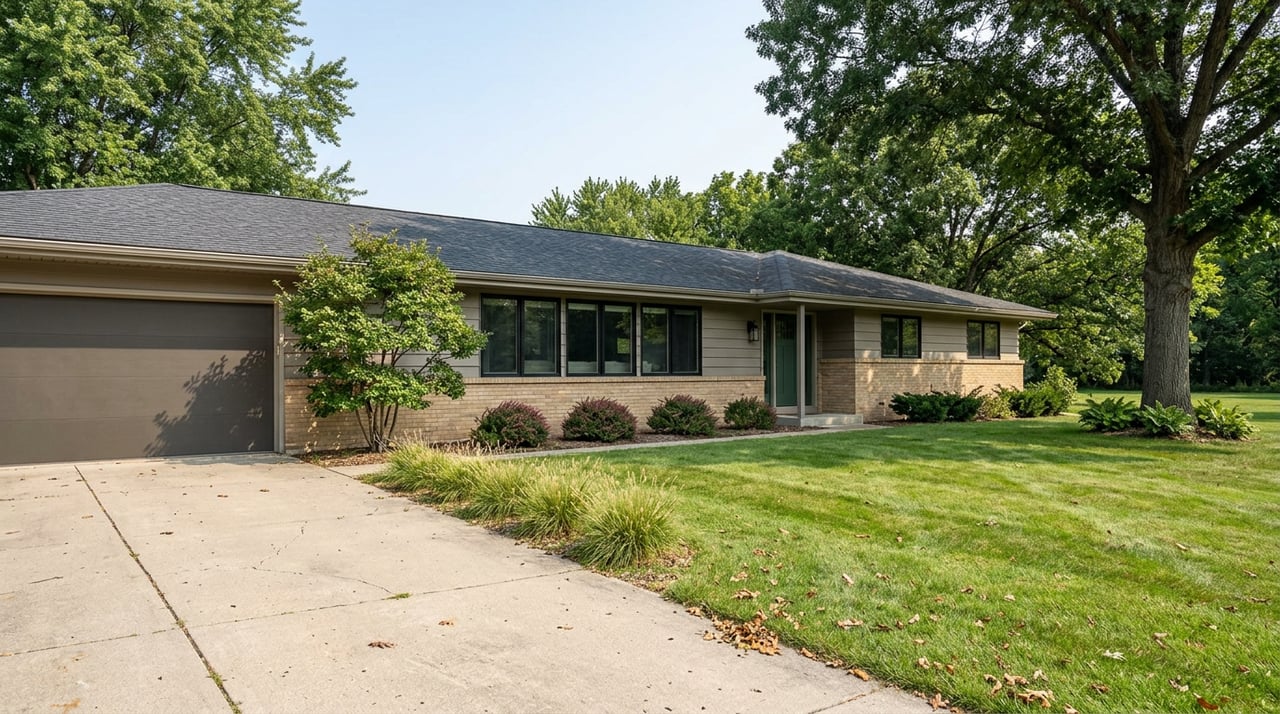
The call usually comes from the title company, not the buyer. Ten days before closing, someone reads the parcel address, checks a box on the commitment, and asks whether the seller has documentation for the well and septic system. If the seller has lived there fifteen years, the answer is often a confused pause, because nobody told them their water and wastewater were never anyone's responsibility but their own.
That confusion is entirely predictable once you understand how Hartford grew. The dividing line that decides whether a home closing includes a well inspection, a septic evaluation, and a lender who wants both resolved before they'll fund a mortgage has almost nothing to do with the home's condition, its price, or how far it sits from downtown. It has to do with whether that specific parcel was ever annexed into the city.
The Boundary That Isn't in the Listing
The City of Hartford runs its own water utility, drawing from five municipal wells that range from a shallow well built in 1962 to a 180-foot well completed in 1993, serving close to 6,000 customers within city limits. The city's wastewater plant treats sewage not just for the city itself but for two neighboring sanitary districts, Rubicon and Pike Lake, under agreements that extend service beyond the city boundary in those specific pockets.
Everywhere else in the surrounding Town of Hartford, a property either falls into a sanitary district like Hilldale or Pike Lake Utility District, or it doesn't, and if it doesn't, the house runs on a private well and its own septic system, formally called a Private Onsite Wastewater Treatment System, or POWTS.
Here is the part that catches people off guard: city sewer service in Hartford has historically followed annexation, not the other way around. City code states plainly that in the areas it designates as its growth sphere, annexation must happen before sewer service is extended, with narrow exceptions the Common Council reviews case by case. The city also actively discourages new sanitary districts from forming near its edges because absorbing them later, if the area annexes, creates administrative headaches. In practical terms, that means the availability of municipal water and sewer at a given address is a function of decades-old boundary decisions, not proximity to downtown or the quality of the home sitting on the lot. A newer, larger house a half mile past the city line can be entirely dependent on a well and a septic tank, while an older, smaller home closer in has been on city water for fifty years.
Two Homes, Two Sets of Rules
If you're comparing two listings that both say "Hartford, WI 53027," the address alone won't tell you which set of rules applies. Here's what actually changes depending on which side of that boundary a property sits.
| Inside city water/sewer service | On private well and POWTS | |
|---|---|---|
| Who maintains the system | City of Hartford Water and Sewer Utilities | The property owner |
| Required testing at sale | None specific to utility, standard closing process | Well water tested for coliform bacteria, nitrate, and arsenic if a well inspection is ordered |
| Who can perform inspections | Not applicable | Only a DNR-licensed well driller or pump installer, a requirement in place since June 1, 2008 |
| Mandatory maintenance cycle | Utility-managed, billed monthly | County-mandated pumping and inspection every 2 years for at-grade, mound, or in-ground pressure systems, every 3 years for conventional systems |
| Failure cost exposure | Utility connection fee, if any | A failing system commonly means $10,000 to $20,000 or more for a mound system replacement, depending on soil and site conditions |
Wisconsin law does not actually require a well inspection as part of a property transfer. The Department of Natural Resources is explicit that this is a choice buyers and sellers make, though many lenders require it anyway before they'll close a mortgage on a well-served property. Septic inspection and maintenance, by contrast, is not optional. Washington County's sanitary code requires every POWTS in the county to be pumped or inspected on that two- or three-year cycle regardless of whether the house is being sold, which means a lapsed inspection can surface as a compliance problem during a sale even if the system itself is working fine.
What Actually Happens During the Inspection
When a well inspection is ordered, whether by a cautious buyer, a lender, or a seller trying to get ahead of the issue, the process follows a specific sequence set by state code:
- A licensed well driller or pump installer visually inspects the well cap, casing, and pressure system for compliance with the regulations in effect when the well was built.
- The inspector runs a pumping test with a flow meter and pressure gauge to confirm the well and pump are performing at minimum required capacity.
- Water samples are drawn and sent to a certified lab, tested at minimum for coliform bacteria, nitrate, and arsenic.
- The inspector searches the property for any other wells, used or abandoned, since unused wells must be properly filled and sealed to prevent groundwater contamination.
- Findings go on a standardized DNR inspection form, noting any features that don't meet current code, even on older wells that were compliant when built.
Septic evaluations follow a parallel logic. A county-licensed inspector examines the tank, drain field, pump chamber, and any alarms or filters for signs of leaks, blockage, or hydraulic overload, and checks whether the system matches the design on file with Washington County's Land Use Division. If the property has never had its POWTS design recorded, or if the system predates modern recordkeeping, that alone can add time to a transaction while the seller tracks down documentation.
The Safety Net That Disappeared in 2025
For decades, Wisconsin homeowners with a failing septic system had a state backstop. The Wisconsin Fund grant program helped offset the cost of replacing a failing POWTS, particularly for lower-income households. That program is no longer funded in the state budget and formally ended as of June 30, 2025, and the Department of Safety and Professional Services has confirmed that any system installed in 2024 or later isn't eligible for funding under it at all.
That change matters more for sellers than it might first appear. A seller who discovers during a pre-listing inspection that their mound system is failing no longer has a state grant to lean on to help fund the fix. The full replacement cost, commonly $10,000 to $20,000 for a mound system and sometimes more on a difficult site with poor soil or a high water table, now falls entirely on the transaction. That reshapes the negotiation. A buyer's agent who knows the grant is gone has more leverage to ask for a price credit or a pre-closing repair than one still assuming state assistance is available.
What This Means If You're Buying or Selling Near Hartford This Year
If you're listing a home on well and septic anywhere in the Town of Hartford, outside Hilldale or Pike Lake Utility District service, the smart move is ordering your own well and septic evaluation before you ever put a sign in the yard, not after an offer arrives with a lender-required contingency attached. A pumping and inspection record that's current, plus a clean water test, removes one of the most common reasons a Hartford-area closing gets pushed back two or three weeks while a buyer's lender waits on lab results.
If you're buying, ask the listing agent directly whether the property is on city water and sewer, a sanitary district, or an individual well and POWTS, and don't assume the answer from the address alone. A property a few hundred yards outside the annexed area can carry real costs a similar-looking home inside the line simply doesn't have.
This is exactly the kind of detail that separates a straightforward resale from one that needs someone who's dealt with wells, septic records, and county permitting before. Craig Kasten works Hartford and the rest of Washington County regularly, on both the resale side and the investor and rehab side, and knows which parcels sit inside city service and which ones don't before a buyer ever asks.
A Few Questions Worth Asking Early
Does every home outside Hartford's city limits have a well and septic system? Not necessarily. Some outlying areas fall inside sanitary districts like Hilldale or Pike Lake Utility District, which provide utility-style service without full city annexation. Always confirm which category a specific parcel falls into rather than assuming based on distance from downtown.
How long does a well and septic inspection typically add to a transaction timeline? The well portion depends mostly on lab turnaround for the water sample. The septic portion depends on whether records are already on file with Washington County or need to be tracked down. Either way, ordering both early in the listing process, rather than waiting for a buyer to request them, keeps them from becoming a closing delay.
Is a well inspection legally required to sell a home in Wisconsin? No. State law doesn't mandate it for a property transfer. Many lenders require one anyway before funding a mortgage on a well-served property, so check with your buyer's lender early rather than assuming it's optional in practice.
Get a Free Home Valuation & Consultation with Craig Kasten if you're weighing a sale on well and septic in the Hartford area, or want a straight answer on which side of the service line a property you're considering actually falls on.