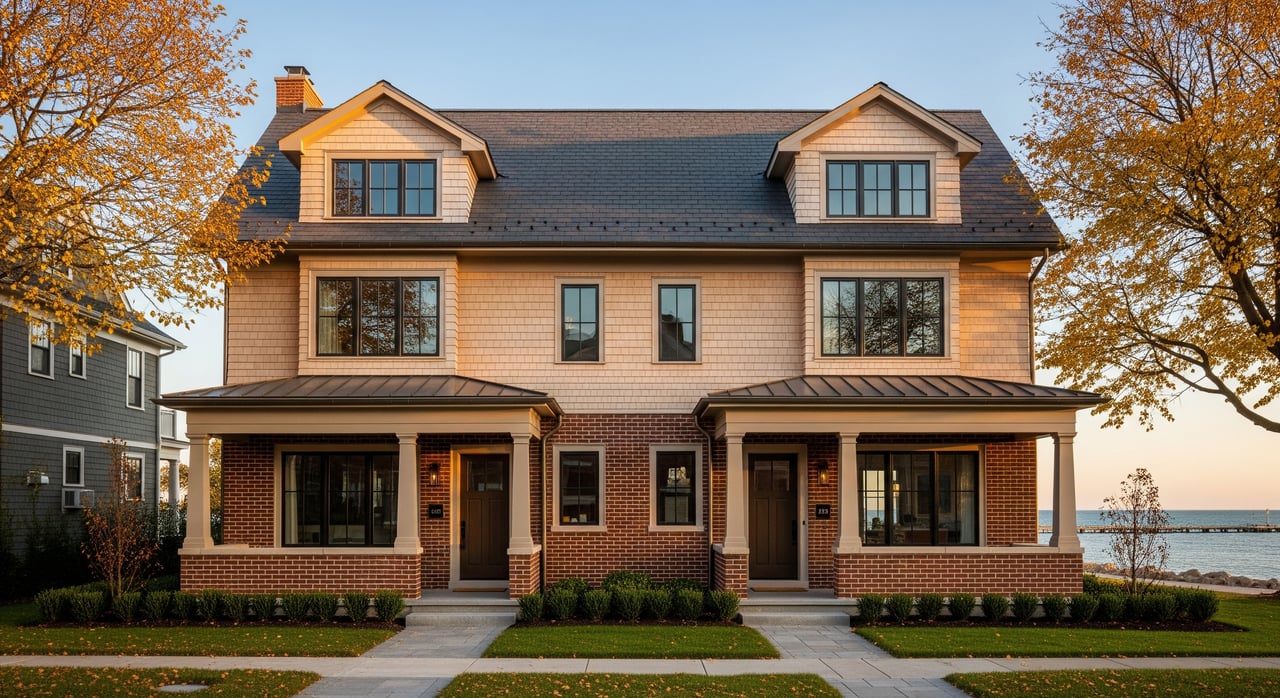
Thinking about house-hacking a duplex near Lake Michigan or adding a small multifamily to your portfolio? Sheboygan offers a practical mix of price points, older duplex inventory, and steady rental demand. You want clear numbers and a simple way to judge whether a deal pencils. This guide gives you a step-by-step framework to estimate costs, rents, ROI, and local rules, plus a plug-and-play pro forma you can use on any property. Let’s dive in.
Why Sheboygan duplexes work
Sheboygan is a small Midwestern city on Lake Michigan with a diverse housing stock, including many older duplexes. Neighborhoods and proximity to the lake can influence both purchase prices and achievable rents. That is why you should verify numbers at the neighborhood or even block level.
Local demand is driven by employment, regional services, and seasonal tourism. Before you buy, scan community data and trends using the U.S. Census Bureau’s data portal and recent employment snapshots from the Bureau of Labor Statistics or the Wisconsin Department of Workforce Development. These sources help you confirm renter share, household income, and job stability.
Where to get current prices and rents
Closed-sale comps and recently leased rents are more reliable than asking prices. Pull recent duplex sales and active listings from the local MLS, then compare them to actual closed prices to see the spread. If you do not have MLS access, partner with a local agent who works small multifamily.
For rents, focus on nearby, recently leased units with the same bedroom count and similar condition. Call a few Sheboygan property managers for real-world rent ranges and typical concessions. Rent tools can help with a quick check, but adjust for unit condition, included utilities, parking, and appliances to avoid overestimating.
Acquisition costs in Sheboygan
When you price out a duplex, include the full cost picture, not just the purchase price.
- Purchase price: Base this on recent closed duplex comps and current list-to-sale spreads.
- Closing costs: Budget 2–5% of the purchase price for title, recording, lender, and appraisal fees.
- Inspections: Include general, roof, foundation, HVAC, electrical, and plumbing. Add sewer scope or pest inspection if indicated.
- Initial repairs: Older Sheboygan properties may need cosmetic updates and system tune-ups. Budget with two to three local contractor bids.
- Reserves: Hold operating reserves and a capital reserve for bigger items. A prudent target is several months of expenses plus a capex fund.
Financing options to compare
How you finance a duplex can change your cash flow more than you think. Compare scenarios side by side.
- Owner-occupied loans: If you will live in one unit, explore FHA and conventional. FHA’s standard 203(b) program allows 1–4 unit owner-occupied properties with as little as 3.5% down. Review program basics on the HUD FHA 203(b) page, and talk to lenders about mortgage insurance, income limits, and unit requirements.
- Conventional loans: Owner-occupied 2–4 unit loans may offer lower rates and lighter down payments than pure investment loans. Terms vary by lender and credit.
- Investment property loans: Expect higher down payments, higher rates, and lender DSCR requirements.
- Local lenders: Small banks and credit unions in and around Sheboygan often know duplex underwriting well and can be flexible on local properties. Get written quotes for both owner-occupied and investor scenarios.
Build your rent and income model
Start with the building’s realistic income potential and adjust for downtime and collections.
- Gross scheduled rent (GSR): Total monthly market rent for both units, annualized.
- Other income: Parking, storage, coin laundry, or pet fees.
- Vacancy and credit loss: Use a conservative allowance. In a stable market, 5–8% is a common modeling range. Verify with local property managers.
Effective Gross Income (EGI) = GSR − vacancy + other income.
Operating expenses to include
Estimate each category with local quotes where possible. Older properties and lake-effect weather can impact costs.
- Property taxes: One of your largest expenses. Verify the exact tax bill and assessment history through local records. For general property tax guidance, review the Wisconsin Department of Revenue.
- Insurance: Quote a rental dwelling or landlord policy. Ask about wind and hail coverage and differences if you will occupy one unit.
- Utilities: Confirm who pays water, sewer, heat, and electric. Duplexes often split some utilities but not all.
- Repairs and maintenance: A rule of thumb is 5–10% of gross rent, adjusted for condition and age.
- Property management: If you hire a manager, plan for 6–10% of collected rent. Self-managing saves cash but costs time.
- Capital expenditures: Roof, HVAC, windows, and exterior work. Reserve 5–10% of gross or budget known items.
- HOA or municipal fees: If applicable.
Net Operating Income (NOI) = EGI − operating expenses. NOI excludes mortgage payments.
ROI metrics that matter
Use these definitions to compare properties on equal footing.
- Cap rate = NOI ÷ purchase price. A snapshot return before financing.
- Cash-on-cash return = annual pre-tax cash flow ÷ total cash invested. Total cash invested includes down payment, closing costs, and initial repairs.
- DSCR = NOI ÷ annual debt service. Lenders often want DSCR above 1.2–1.3 for investment loans.
- GRM = purchase price ÷ GSR. A quick first screen. Lower is usually better, all else equal.
Plug-and-play pro forma template
Gather your numbers and fill in the blanks for a fast first pass.
Units and rents
- Unit A monthly rent: _______
- Unit B monthly rent: _______
- Gross scheduled rent (annual): (A + B) × 12 = _______
- Other income (annual): _______
- Vacancy allowance: % of GSR = −
- Effective Gross Income (EGI): _______
Operating expenses (annual)
- Property taxes: _______
- Insurance: _______
- Utilities you pay: _______
- Repairs and maintenance: _______ (start with 5–10% of GSR)
- Property management: _______ (6–10% of collected rent if applicable)
- Capital reserve: _______ (5–10% of GSR)
- Other/fees: _______
- Total operating expenses: _______
Performance
- Net Operating Income (NOI) = EGI − expenses = _______
- Purchase price: _______
- Cap rate = NOI ÷ price = _______
Financing and returns
- Down payment + closing + initial repairs (cash invested): _______
- Loan amount, rate, term: _______
- Annual debt service: _______
- Cash flow before tax = NOI − debt service = _______
- Cash-on-cash return = cash flow ÷ cash invested = _______
- DSCR = NOI ÷ debt service = _______
Use this as a screen. If the deal is close, refine the inputs with exact taxes, insurance quotes, and current lender terms.
Local rules and compliance in Sheboygan
Landlord responsibilities and tenant rights in Wisconsin are governed by state law. Review the Wisconsin landlord-tenant statutes (Wis. Stat. ch. 704) for rules on security deposits, notices, and the eviction process.
Before you lease, confirm city-level requirements. Check the City of Sheboygan for building inspection policies, code enforcement, parking or occupancy rules, and any rental inspection or certificate requirements. If the property was built before 1978, follow federal lead-based paint disclosure rules and plan for lead-safe practices if you renovate.
Always verify smoke and carbon monoxide detector compliance, egress standards, and electrical and plumbing safety. For property taxes, confirm the exact bill and assessment history through local records, and review Wisconsin tax guidance via the Department of Revenue.
Due diligence checklist for a Sheboygan duplex
Use this checklist to avoid surprises before and after closing.
Financial
- Request 12–24 months of income and expense statements if tenant-occupied.
- Verify rent with leases and proof of payment.
- Pull recent property tax bills and assessment history.
- Get two to three insurance quotes.
Physical and inspections
- General home inspection plus HVAC, roof, foundation, plumbing, and electrical.
- Lead-based paint check for pre-1978 buildings; mold or asbestos testing as needed.
- Pest inspection and sewer scope if indicated.
- Contractor bids for turns and any rehab.
Legal and compliance
- Review leases for compliance with Wisconsin law.
- Ask City of Sheboygan code enforcement about prior violations or open permits.
- Verify zoning and allowed occupancy.
Market and rent validation
- Compare recent duplex comps and time on market.
- Call local property managers for actual rented rents and typical concessions.
- Check for upcoming multifamily supply that could affect rents.
Financing and tax
- Compare owner-occupied and investor loan quotes.
- Consult a local CPA on depreciation and Wisconsin tax rules if needed.
Risks and how to manage them
A duplex concentrates risk into two units. Losing one tenant cuts income quickly, and older systems can surprise you.
- Vacancy risk: Model a realistic vacancy rate and maintain reserves equal to 3–6 months of expenses.
- Capex risk: Inspect major systems and budget a capital reserve. Do not skip roof and foundation opinions.
- Regulatory risk: Monitor any changes to city rental rules and state landlord-tenant law.
- Interest rate risk: Fix your rate where it fits your plan, and stress test cash flow at higher rates.
- Execution risk: If you are new to landlording, consider a property manager to reduce mistakes and keep rents aligned with the market.
Next steps
Build a shortlist of duplexes and run the pro forma above with conservative inputs. Verify taxes, insurance, and rents with local sources before you write an offer. If you plan to live in one unit, compare owner-occupied loan options, including FHA’s 203(b) guidelines, against conventional terms.
If you want local comps, rent benchmarks, and a clear plan to acquire and operate a duplex in Sheboygan, connect with Craig Kasten. Get a Free Home Valuation & Consultation and a practical next-step game plan.
FAQs
What should first-time duplex buyers in Sheboygan research first?
- Start with recent duplex sale comps, actual leased rents nearby, property tax history, and a full inspection. Then build a pro forma using conservative vacancy and expense assumptions.
How do I estimate rent for a Sheboygan duplex accurately?
- Use recently leased rents from similar nearby units, then adjust for unit condition, utilities included, parking, and appliances. Confirm with two local property managers.
Can I use FHA to buy a duplex and live in one unit?
- Yes, FHA’s standard 203(b) program allows 1–4 unit owner-occupied properties with low down payments. Review the basics on HUD’s site and confirm details with your lender.
What vacancy rate should I use in my model for Sheboygan?
- A 5–8% vacancy and credit loss assumption is a common starting point in stable markets. Validate with local managers for the specific neighborhood.
Do I need a rental license or inspection in Sheboygan?
- Check the City of Sheboygan’s building inspection and code pages for current requirements on rental inspections, occupancy, parking, or certificates before you lease.
Which Wisconsin laws affect my lease and deposits?
- Wisconsin landlord-tenant statutes in Wis. Stat. ch. 704 set rules for deposits, notices, and the eviction process. Read the statute and align your lease accordingly.